Fatma İnce Çırak
SAĞLIK BİLİMLERİ FAKÜLTESİ SAĞLIK YÖNETİMİ BÖLÜMÜ SAĞLIK YÖNETİMİ ANABİLİM DALI
Fatma İnce Çırak
SAĞLIK BİLİMLERİ FAKÜLTESİ SAĞLIK YÖNETİMİ BÖLÜMÜ SAĞLIK YÖNETİMİ ANABİLİM DALI
-
Varyant-
-
E-Postafatma.ince@mersin.edu.tr
-
Web Sitesi
-
Durum-
-
Ünvan-
-
YÖK Araştırmacı No109209
-


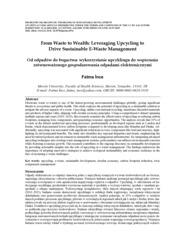
From Waste to Wealth: Leveraging Upcycling to Drive Sustainable E-Waste Management
İnce, Fatma
Electronic waste (e-waste) is one of the fastest-growing environmental challenges globally, posing significant threats to ecosystems and public health. This study explores the potential of upcycling as a sustainable solution to mitigate the adverse impacts of e-waste. Upcycling, unlike conventional recycling, transforms discarded materials into products of higher value, aligning with circular economy principles. Using a comprehensive dataset spanning multiple regions and years (2010–2023), this research examines the effectiveness of upcycling in reducing carbon footprints, managing toxic components, and generating economic opportunities. The analysis reveals that 33% of e-waste in the dataset underwent upcycling processes, predominantly in developed regions such as London and Berlin, which demonstrated lower carbon footprints compared to developing areas like Mumbai and Dhaka. Additionally, upcycling was associated with significant reductions in toxic components like lead and mercury, highlighting its environmental benefits. The study also identifies key regional disparities and trends, emphasizing the need for tailored policies and investment in sustainable waste management infrastructure. By integrating advanced upcycling techniques into existing waste management systems, polic...
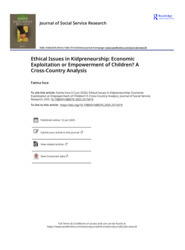
Ethical Issues in Kidpreneurship: Economic Exploitation or Empowerment of Children? A Cross-Country Analysis
ince, Fatma
This study explores the ethical dimensions of kidpreneurship, a growing phenomenon where children engage in entrepreneurial activities, often facilitated by adults or digital platforms. Drawing from a cross-country comparative analysis, the research examines whether such involvement constitutes economic exploitation or a form of empowerment. The findings reveal significant variation in cultural, legal, and institutional frameworks, shaping how kidpreneurship is perceived and practiced. While some countries promote child entrepreneurship through structured educational programs, others lack adequate safeguards, increasing the risk of exploitation. The study contributes to the discourse on child labor, entrepreneurship, and digital economy ethics, offering policy recommendations to ensure children’s rights and development are prioritized.