- Görüntülenme 4
- İndirme 0
-
 Google Akademik
| Yazarlar | Nural, Yahya |
| Kurum Dışı Yazarlar | Gurgul, Serkan Keskin, Ozlem Demirel, Can Ozkars, Mehmet Yasar |
| Tek Biçim Adres (URI) | https://hdl.handle.net/20.500.14114/9899 |
| Yayın Türü | Bildiri |
| Yayın Yılı | 2017 |
| Yayıncı | SANKO University Innovation in Medicine Summit-3 |
| Editör / Editörler | - |
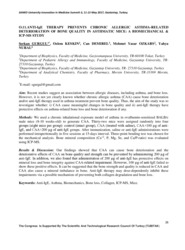
Aim: Recent studies suggest an association between allergic diseases, including asthma, and bone loss.
However, it is not yet clearly known whether chronic allergic asthma (CAA) cause bone deterioration
and/or anti-IgE therapy used in asthma treatment prevent bone quality. Thus, the aim of the study was to
investigate whether: i) CAA cause meaningful changes in bone quality and ii) anti-IgE therapy have
protective effects on asthma-related bone loss and bone deterioration if any.
Methods: We used a chronic inhalational exposure model of asthma in ovalbumin-sensitized BALB/c
male mice (8-10 weeks-old) to generate CAA. Thirty-two mice were assigned randomly into four
groups (eight mice per group): control (intact group), CAA (treated with saline), CAA+100 µg of anti
IgE, and CAA+200 µg of anti-IgE groups. After immunization, saline or anti-IgE administrations were
performed intraperitoneally in five sessions at 15-days interval. Three-point bending test was chosen for
the mechanical analysis. Bone mineral composition (Ca+2, P, Mg, Se, and Ca/P-ratio) was evaluated
using ICP-MS.
Results & Discussion: Our findings showed that CAA can cause bone deterioration and the
deteriorative effects of CAA on bone quality and strength can be prevented by administering 200 µg of
anti-IgE. In addition, we also found that administration of 200 µg of anti-IgE has protective effects on
mineral loss and bone integrity against CAA-related impairment. However, 100 µg of anti-IgE failed to
show these positive effects. It can be suggested that the bone strength and quality is reduced in CAA and
CAA also cause a mineral imbalance in bone. Anti-IgE therapy may dose-dependently inhibit these
impairments via a possible mechanism of preventing both collagen degradation and bone loss.
- Fakülteler
- Eczacılık Fakültesi
- Temel Eczacılık Bilimleri Bölümü
- Analitik Kimya Anabilim Dalı
|
Eser Adı dc.title |
Anti-Ige Therapy Prevents Chronic Allergic Asthma-Related Deterioration of Bone Quality in Asthmatic Mice: A Biomechanical & ICP-MS Study |
|---|---|
|
Özet dc.description.abstract |
Aim: Recent studies suggest an association between allergic diseases, including asthma, and bone loss. However, it is not yet clearly known whether chronic allergic asthma (CAA) cause bone deterioration and/or anti-IgE therapy used in asthma treatment prevent bone quality. Thus, the aim of the study was to investigate whether: i) CAA cause meaningful changes in bone quality and ii) anti-IgE therapy have protective effects on asthma-related bone loss and bone deterioration if any. Methods: We used a chronic inhalational exposure model of asthma in ovalbumin-sensitized BALB/c male mice (8-10 weeks-old) to generate CAA. Thirty-two mice were assigned randomly into four groups (eight mice per group): control (intact group), CAA (treated with saline), CAA+100 µg of anti IgE, and CAA+200 µg of anti-IgE groups. After immunization, saline or anti-IgE administrations were performed intraperitoneally in five sessions at 15-days interval. Three-point bending test was chosen for the mechanical analysis. Bone mineral composition (Ca+2, P, Mg, Se, and Ca/P-ratio) was evaluated using ICP-MS. Results & Discussion: Our findings showed that CAA can cause bone deterioration and the deteriorative effects of CAA on bone quality and strength can be prevented by administering 200 µg of anti-IgE. In addition, we also found that administration of 200 µg of anti-IgE has protective effects on mineral loss and bone integrity against CAA-related impairment. However, 100 µg of anti-IgE failed to show these positive effects. It can be suggested that the bone strength and quality is reduced in CAA and CAA also cause a mineral imbalance in bone. Anti-IgE therapy may dose-dependently inhibit these impairments via a possible mechanism of preventing both collagen degradation and bone loss. |
|
Yazarlar dc.contributor.author |
Nural, Yahya |
|
Kurum Dışı Yazarlar dc.contributor.other |
Gurgul, Serkan |
|
Kurum Dışı Yazarlar dc.contributor.other |
Keskin, Ozlem |
|
Kurum Dışı Yazarlar dc.contributor.other |
Demirel, Can |
|
Kurum Dışı Yazarlar dc.contributor.other |
Ozkars, Mehmet Yasar |
|
Yayıncı dc.publisher |
SANKO University Innovation in Medicine Summit-3 |
|
Yayın Türü dc.type |
Bildiri |
|
Kayıt Giriş Tarihi dc.date.accessioned |
2026-02-10 |
|
Tek Biçim Adres (URI) dc.identifier.uri |
- |
|
Tek Biçim Adres (URI) dc.identifier.uri |
https://hdl.handle.net/20.500.14114/9899 |
|
Dil dc.language.iso |
eng |
|
Atıf İçin Künye dc.identifier.citation |
Gürgül, S., Keskin, Ö., Demirel, C., Özkars, M.Y, Nural, Y. “Anti-Ige Therapy Prevents Chronic Allergic Asthma-Related Deterioration of Bone Quality in Asthmatic Mice: A Biomechanical & ICP-MS Study”, Innovation in Medicine Summit-3, 11-13 May, Gaziantep, Türkiye, 2017. Page: 26”. |
|
Haklar dc.rights |
- |
|
İlk Sayfa dc.identifier.startpage |
26 |
|
Son Sayfa dc.identifier.endpage |
26 |
|
Açık Erișim Tarihi dc.date.available |
2026-02-10 |
|
Yayın Yılı dc.date.issued |
2017 |
-
PDF